
By Kate Leeson, Founder & Managing Director, Healthtech Marketing Solutions
Awareness stage marketing is the foundation every other stage of the healthcare buying journey depends on, yet it’s the stage most healthcare brands rush past to chase conversions. It’s an easy mistake to make. Awareness doesn’t produce a lead, a booking or a sale on the spot, so it’s often treated as optional. But the buyer journey doesn’t skip steps just because a business does.
Every healthcare purchase, whether it’s a hospital evaluating new equipment, a clinician choosing a supplier or a patient researching treatment options, follows the same path: awareness, consideration, conversion and loyalty. If your audience never reaches the first step, they can’t reach the last one either.
Why Awareness Stage Marketing Gets Overlooked in Healthcare
Healthcare businesses are under constant commercial pressure. Sales targets, product launches and enquiry numbers all demand attention now, so marketing budgets naturally drift toward the stages that look like they’re closing deals: paid search, retargeting, sales collateral, conversion-focused landing pages.
Awareness stage marketing works differently. It builds recognition, trust and category understanding before a prospect is actively looking to buy. For a medical device company, that might mean educating hospital stakeholders on a new category of treatment before a tender is even open. For a pharmaceutical brand, it might mean building disease-state awareness with healthcare professionals well ahead of a product launch.
Without that groundwork, conversion activity has nothing to convert. A sales team can be highly skilled, and a landing page can be beautifully designed, but neither can generate demand that was never created in the first place.
The Real Cost of Skipping Awareness Stage Marketing
When healthcare brands skip awareness, the effects show up further down the funnel, usually where they’re hardest to diagnose. Sales cycles stretch out because the sales team is doing the work marketing should have done, explaining the category, building trust and justifying why the business matters before they can even begin discussing a solution.
Conversion rates suffer too. A prospect who lands on a website or sales page with no prior context is far less likely to act than one who already recognises and trusts the brand. And loyalty, the final stage, is almost impossible to build with an audience that never properly understood who you are or what you stand for in the first place.
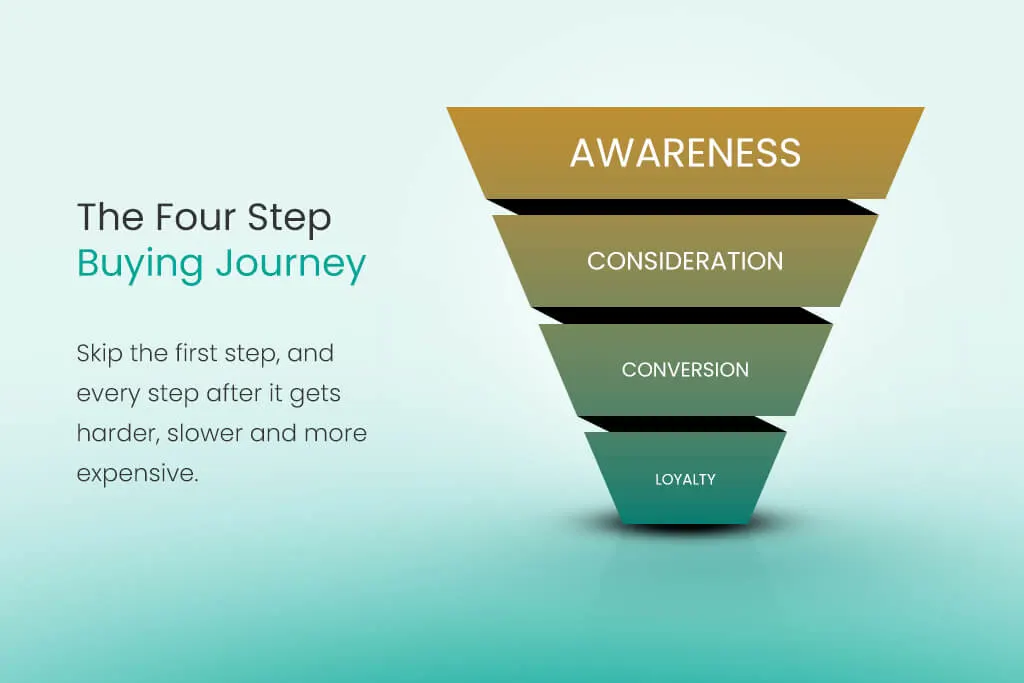
This is the gap illustrated so clearly by the four-step healthcare buying journey: awareness, consideration, conversion, loyalty. Skip the first step and every step after it becomes harder, slower and more expensive.
How Awareness Stage Marketing Shortens the Sales Cycle
There’s a strategic argument here that healthcare businesses often miss: awareness marketing isn’t a cost centre sitting separate from sales, it’s what makes sales more efficient.
“Digital marketing builds awareness at scale so the sales force can enter at the conversion stage, not the education stage. That shift alone shortens lead time and gets far more value out of every marketing dollar spent.”
– Kate Leeson, Founder & Managing Director, Healthtech Marketing Solutions
When a healthcare business invests in genuine awareness, whether through content, SEO, digital campaigns or thought leadership, the sales team stops spending their time on category education. They walk into conversations with prospects who already understand the problem and already have some trust in the brand. That’s the difference between a sales team explaining from scratch and a sales team closing.
Building an Awareness Stage Marketing Strategy That Works
Effective awareness marketing in healthcare isn’t about broad-reach advertising for its own sake. It needs to be targeted, credible and built for audiences who are cautious by nature, whether that’s clinicians, procurement teams, hospital boards or patients navigating sensitive health decisions.
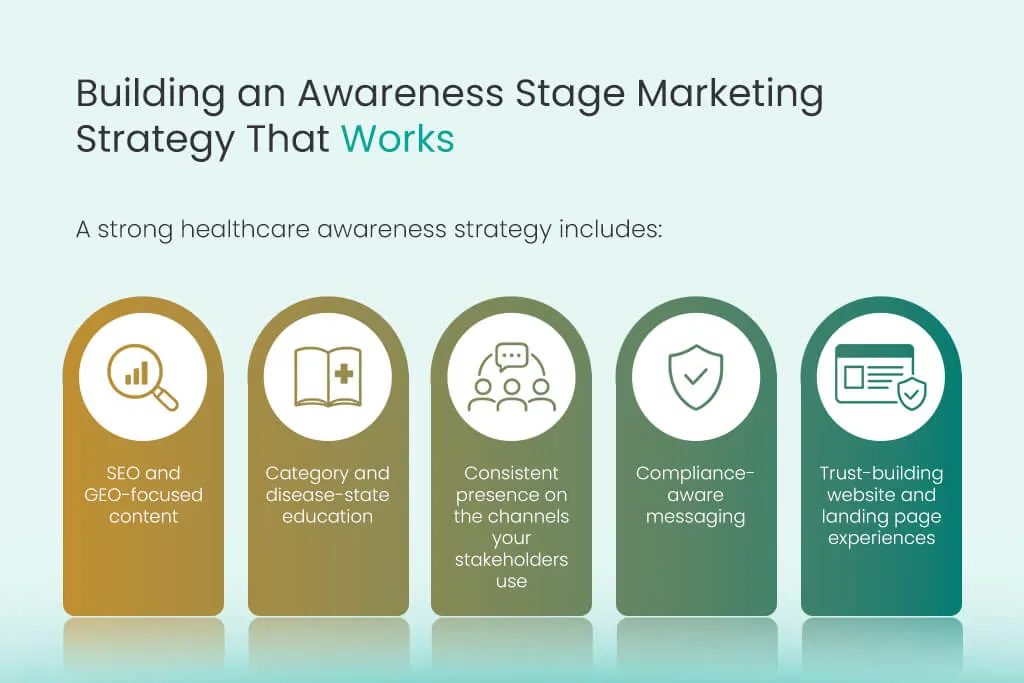
A strong awareness strategy for a healthcare brand typically includes:
-
SEO and GEO-focused content that answers real questions your audience is searching for, well before they’re ready to buy
-
Educational content that builds category and disease-state understanding, not just product features
-
A consistent presence across the channels your stakeholders actually use, from LinkedIn to search to industry publications
-
Messaging that reflects the complexity and compliance considerations of regulated healthcare markets
-
Website and landing page experiences that reinforce trust the moment someone arrives, not just at the point of enquiry
None of this replaces sales activity. It supports it, by doing the groundwork sales was never designed to do alone.
Where Healthtech Marketing Solutions Fits In
Healthcare marketing is all we do at Healthtech Marketing Solutions. We work with medical device companies, pharmaceutical businesses, medical cannabis brands and healthcare providers who need marketing that understands the realities of their market, complex buying journeys, regulatory considerations and the trust that has to be earned before a sale can happen.
We help healthcare businesses build the awareness stage properly, through strategy, SEO, content and digital marketing, so the consideration, conversion and loyalty stages that follow have something solid to build on.
If your sales team is doing more explaining than closing, that’s usually an awareness gap, not a sales problem.
Let’s build a healthcare marketing strategy that works harder for your business.
Speak with a specialist healthcare marketing team.

Frequently Asked Questions
What is awareness stage marketing in healthcare?
Awareness stage marketing is the activity that introduces a healthcare brand, product or service to an audience before they're actively looking to buy. It builds recognition, category understanding and early trust, so prospects already know and trust a business by the time they reach the consideration and conversion stages.
Why can't healthcare brands skip the awareness stage?
Every healthcare buyer, whether a hospital, clinician or patient, moves through the same journey: awareness, consideration, conversion, loyalty. Skipping awareness means asking the sales team to build trust and educate the market from scratch, which lengthens sales cycles and reduces conversion rates further down the funnel.
How does awareness stage marketing affect the sales cycle?
Awareness stage marketing shortens the sales cycle by handling category education and trust-building before a prospect ever speaks with sales. This lets the sales force enter at the conversion stage rather than the education stage, so conversations move faster and marketing spend goes further.
What channels work best for healthcare awareness marketing?
SEO and GEO-focused content, educational articles, LinkedIn presence and industry publications tend to perform well for healthcare awareness, since they reach clinicians, procurement teams and patients where they're already researching. The right mix depends on the audience, whether that's hospital stakeholders, healthcare professionals or patients.
Is awareness marketing suitable for regulated healthcare sectors like pharma and MedTech?
Yes, though messaging needs to reflect the compliance considerations of regulated markets. Awareness content for pharmaceutical and MedTech brands should focus on disease-state or category education rather than direct product claims, and should be reviewed by the appropriate regulatory or compliance adviser where needed.