

Pull up your sales team’s calendar for the last 30 days. If a meaningful share of those calls were first-time introductions rather than demos with buyers who already understood your platform, your healthcare SaaS sales force is quietly doing your cheapest channel’s job.
It’s an easy trap to fall into. Reps run demos, answer detailed implementation questions and close enterprise deals that a website alone never could, so it feels natural to send them out to build awareness too. But every hour a senior sales rep spends explaining what a healthcare SaaS platform does and why it matters is an hour they aren’t spending helping an already-informed buyer move toward a decision.
Here’s the part that’s easy to miss: awareness itself is not optional. Every healthcare buyer moves through it before they’re ready to talk to sales, whether an organisation invests in that stage deliberately or leaves it to chance. Skipping it altogether and going straight to outbound sales activity doesn’t remove the awareness stage, it just forces your most expensive team to run it, one conversation at a time. The only real decision is which channel does that work: a stretched sales team, or a digital marketing engine built to reach the market at scale.
The healthcare SaaS companies shortening their sales cycles and maximising the return on their marketing spend are doing exactly that. They’re using digital marketing to do the heavy lifting on awareness, and reserving their sales force for where it earns the highest return: the conversion stage.
Your Sales Force Is Still Your Strongest Channel
Nothing in this argument diminishes the value of a strong sales team. In healthcare SaaS, human relationships still close deals. Buyers want to see the platform in action. IT leaders want reassurance about security and integration. Clinical operations directors want to know it will actually fit their workflow. A sales rep who can run a sharp demo, answer technical questions on the spot and build genuine trust remains one of the most powerful commercial assets a healthcare SaaS business has.
The problem isn’t the sales force. It’s where in the buying journey that sales force is being deployed.
The Cost of Using Sales Reps to Build Awareness
When a sales rep’s first conversation with a prospect is also that prospect’s first exposure to your platform, the rep isn’t selling. They’re educating a market that isn’t ready to buy yet. That’s an expensive way to create awareness:
- Sales time is the most costly resource in the funnel, and it’s being spent on introductions instead of conversions
- Awareness-stage conversations rarely convert on the spot, so reps end up re-explaining the same platform to the same accounts repeatedly
- Coverage is limited to however many demos a finite sales team can physically run, while competitor content is reaching the whole market at once
- Sales cycles stretch out, because buyers are moving through awareness and consideration during the same calls that should be driving a decision
None of this shows up as an obvious cost on a budget line. It shows up as a longer sales cycle, a smaller pipeline and a sales team stretched thin covering ground that marketing should have covered first.
Digital Marketing’s Job Is to Build Awareness at Scale
This is where digital marketing earns its place in a healthcare SaaS go-to-market strategy – not as a nice-to-have alongside the sales team, but as the mechanism that gets a market ready for the sales team to arrive.
SEO content, GEO-optimised articles, LinkedIn thought leadership, email nurture sequences and product-led content can reach hundreds of IT leaders, clinical operations directors and healthcare decision-makers in the time it takes a single rep to run one demo. Digital channels do the work of introducing the platform, establishing credibility and answering the early-stage questions buyers have, before a sales rep ever picks up the phone.
By the time a prospect books a call with your sales team, they should already understand what the platform does, why it matters and why your organisation is credible. That’s the handover point where a healthcare SaaS sales force delivers the most value: turning an informed, interested buyer into a customer.
“The biggest inefficiency I see in healthcare SaaS go-to-market strategy is sales teams doing marketing’s job. Your reps should be walking into demos with buyers who already know who you are, not explaining it for the first time.”
– Kate Leeson, Healthtech Marketing Solutions
What This Looks Like in Practice
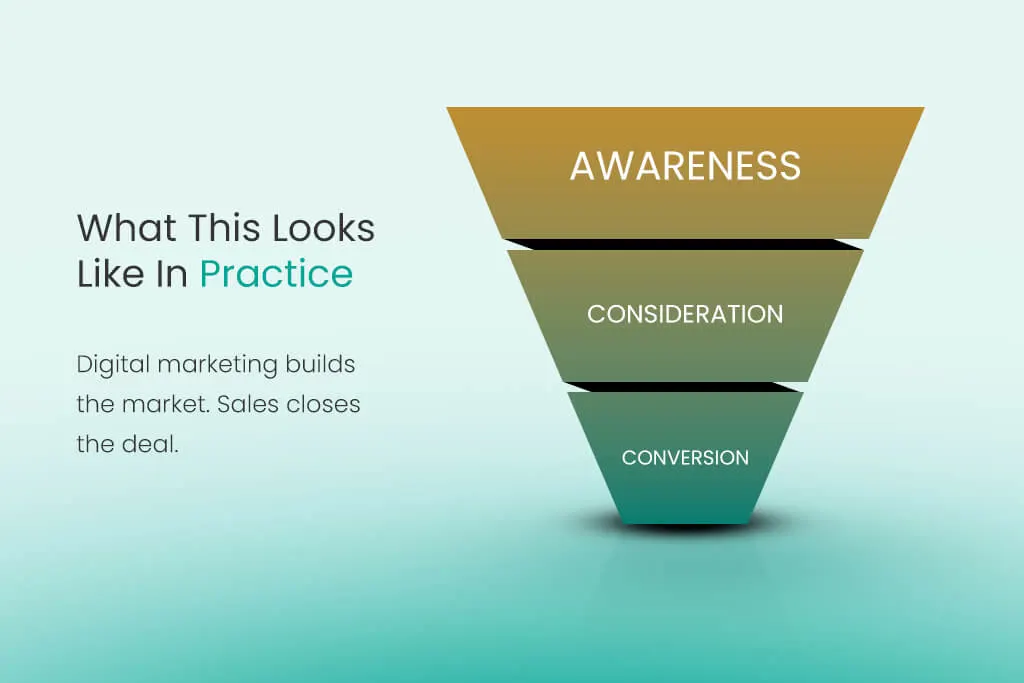
A better-sequenced funnel generally looks like this:
- Awareness: digital marketing reaches the broad market – SEO content, social media, paid campaigns and GEO-optimised resources that put your platform in front of the right healthcare buyers early
- Consideration: digital nurture continues the conversation – email sequences, case studies, webinars and content that build credibility while a prospect evaluates their options
- Conversion: the sales force steps in with a warm, informed prospect, ready to run the demo, answer implementation questions and close the deal
When awareness and consideration are handled by marketing, your sales force spends the majority of its time in genuine conversion conversations, rather than repeat introductions. That’s a faster sales cycle and a marketing budget that’s working proportionally harder for the result you actually want: revenue.
Getting the Balance Right
Rebalancing a go-to-market strategy this way isn’t about replacing your sales force. It’s about giving them a market that’s ready for them. In practice, that starts with an honest audit:
- Where is your sales team currently spending time on awareness-stage conversations that content could handle instead?
- What does your digital footprint look like to an IT leader or clinical operations director researching your category for the first time?
- Is your content actually built to educate and build trust, or is it generic material that could belong to any competitor?
For regulated healthcare environments, this also means working within compliance requirements. Any claims made across digital channels, including those relating to data security, clinical outcomes or regulatory status, should be reviewed by the appropriate compliance adviser before publication.
Let’s Get Your Funnel Working Harder
Healthcare marketing is all we do. We help healthcare SaaS and digital health companies build the digital foundation that gets their sales force into conversion conversations as fast as possible, shortening sales lead time and maximising the return on every dollar of marketing spend.
Let’s build a healthcare marketing strategy that works harder for your business. Contact Healthtech Marketing Solutions to book a consultation.

Frequently Asked Questions
Should healthcare SaaS companies rely on their sales force for market awareness?
Not exclusively. Sales reps are most effective at the conversion stage, where product demos and technical trust close deals. Building broad market awareness is generally faster and more cost-effective through digital marketing channels.
How does digital marketing shorten the sales cycle for healthcare SaaS products?
By educating and building trust with buyers before a sales conversation begins, digital marketing means prospects arrive at sales calls already informed, reducing the number of meetings needed to reach a decision.
What is the ideal role for a sales force in a healthcare SaaS marketing funnel?
The conversion stage, where sales reps run demos, answer implementation and integration questions, and close the sale with informed, interested buyers.
How can healthcare SaaS organisations improve marketing and sales alignment?
By mapping where sales time is currently spent on awareness-stage activity, auditing digital content and building a coordinated funnel where digital marketing and sales force effort are sequenced rather than duplicated.